Loading
Loading...

Loading...
One Mission: Your Peaceful Stroll.
We help Gold Coast families with reactive dogs rediscover the joy of walking together.
Heritage
4 Generations
Puppies
Observed
You know the feeling. White-knuckle grip on the lead. Eyes darting, scanning for the next trigger. That knot in your stomach when you spot another dog coming toward you.
Maybe you've stopped walking during daylight hours. Maybe you cross the street before your dog even notices. Maybe you've started to dread something that should be simple.
You're not alone.
And your dog isn't broken.
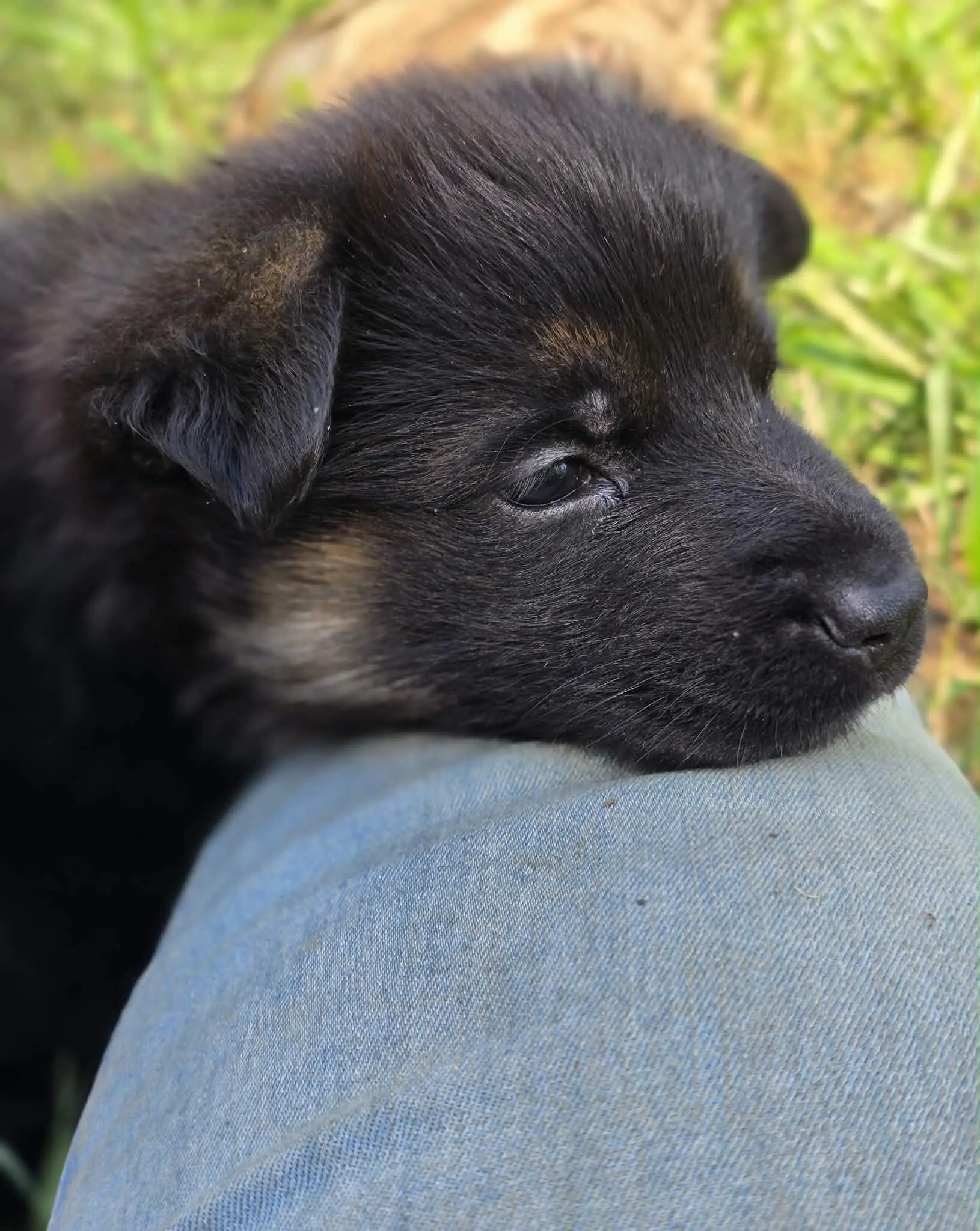
“I didn't learn about canine behaviour from a textbook. I learned it at 3am, bottle-feeding a puppy who wouldn't latch.”
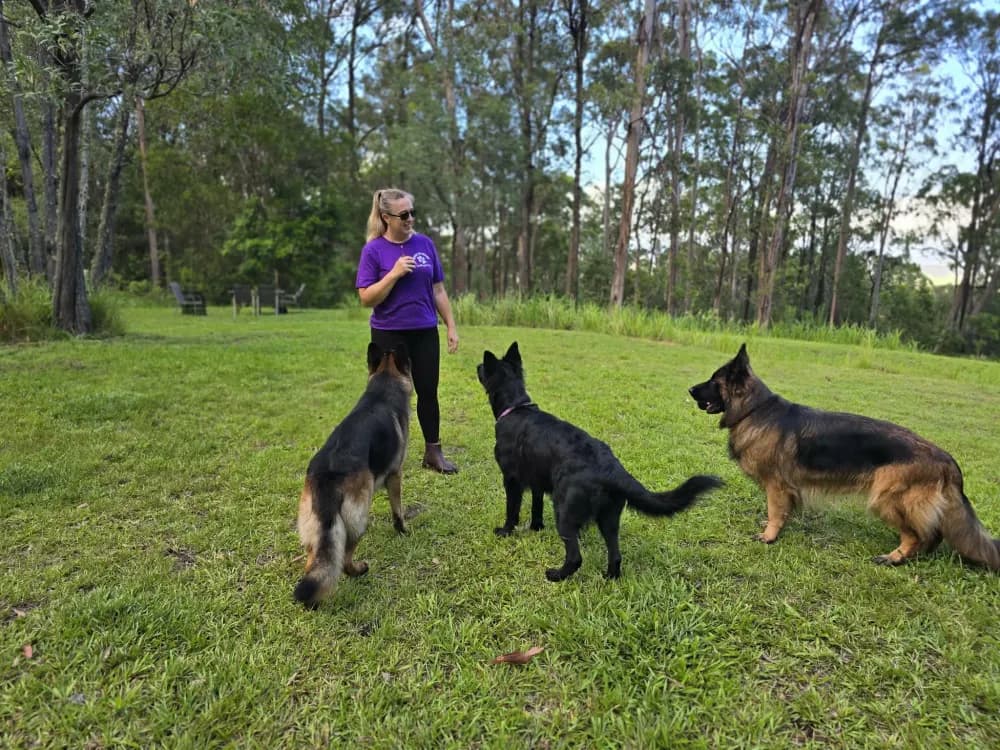
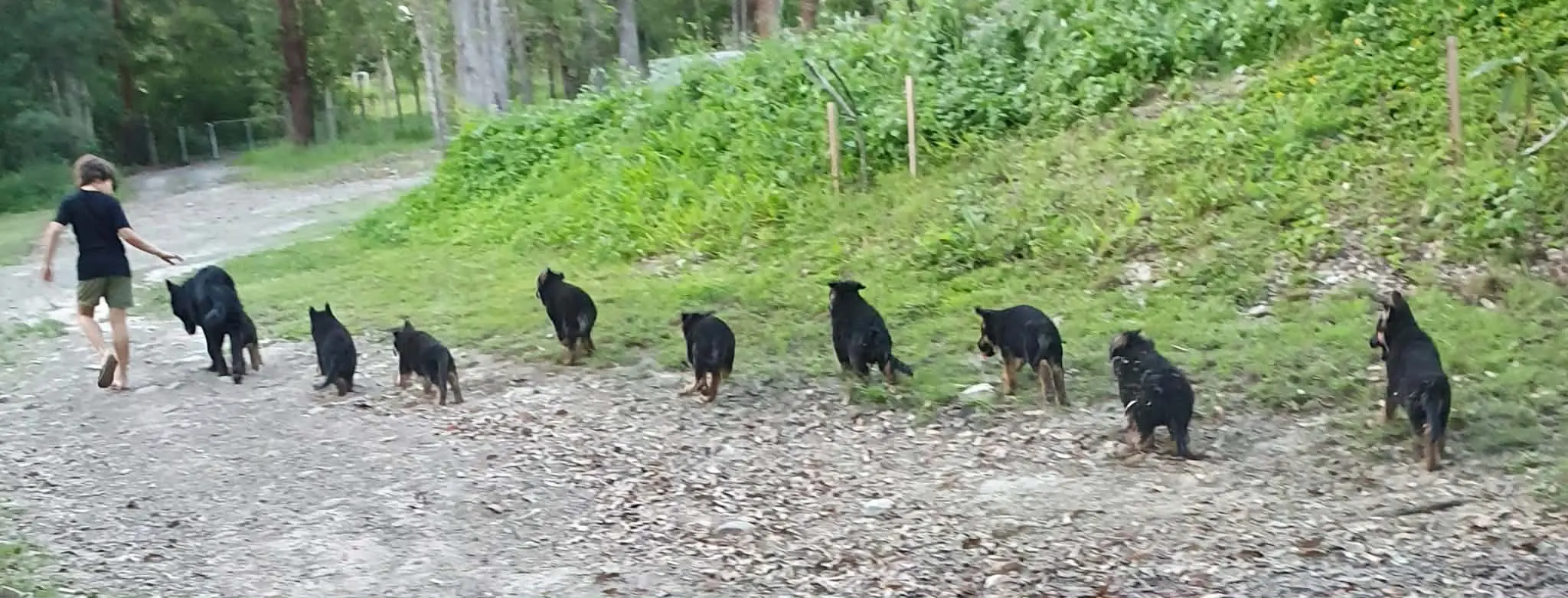
I grew up in a world of German Shepherds. Four generations of women in my family have bred them. My great-grandmother bred them. My grandmother bred them. My mother bred them. I've been around dogs since before I could walk.
That means I didn't learn about canine behaviour from a textbook. I learned it at 3am, bottle-feeding a puppy who wouldn't latch. I learned it watching litters develop week by week, seeing exactly when boldness emerges, when fear periods hit, when a pup's personality starts to crystallise.
By my early twenties, I'd probably observed over a thousand puppies grow from whelp to adult. You start to notice things. Patterns. The micro-signals that predict behaviour before it happens.
But about five years ago, something shifted. I started getting calls from owners who'd done everything right. Dogs from solid breeders. Puppies who'd been socialised properly. And yet here they were: lunging, barking, completely losing it at the sight of another dog.
These weren't aggressive dogs. They weren't “dominant” or “stubborn” or any of those tired labels. They were scared. Overwhelmed. Trying to make the scary thing go away the only way they knew how.
The owners were suffering too. One woman told me she hadn't walked her dog past 6am in eight months. Another said she'd given up entirely and just let her dog out in the backyard. A third was seriously considering rehoming because she couldn't take the stress anymore.
And the advice they were getting? “He just needs a firmer hand.” “Have you tried a prong collar?” “Some dogs are just wired wrong.”
I knew that wasn't true.
Here's what I've learned: reactivity isn't a flaw.
It's not a character defect.
It's communication.
Your dog is telling you something: “I don't feel safe. I don't know what else to do. Please help me.”
Most trainers learn dog behaviour as adults. They study it. I absorbed it. I can read a dog's stress levels before the owner even notices anything's wrong. I know when a dog is about to tip over threshold because I've seen that exact expression on a hundred other faces.
That's not something you get from a certification course. It's something you grow up with.
So I built something different. Not obedience training that papers over the problem. Not corrections that shut a dog down without actually helping them feel safer.
I wanted to change how the dog feels, not just how they behave. Because a dog who's calm because they've been suppressed isn't the same as a dog who's calm because they actually feel okay.
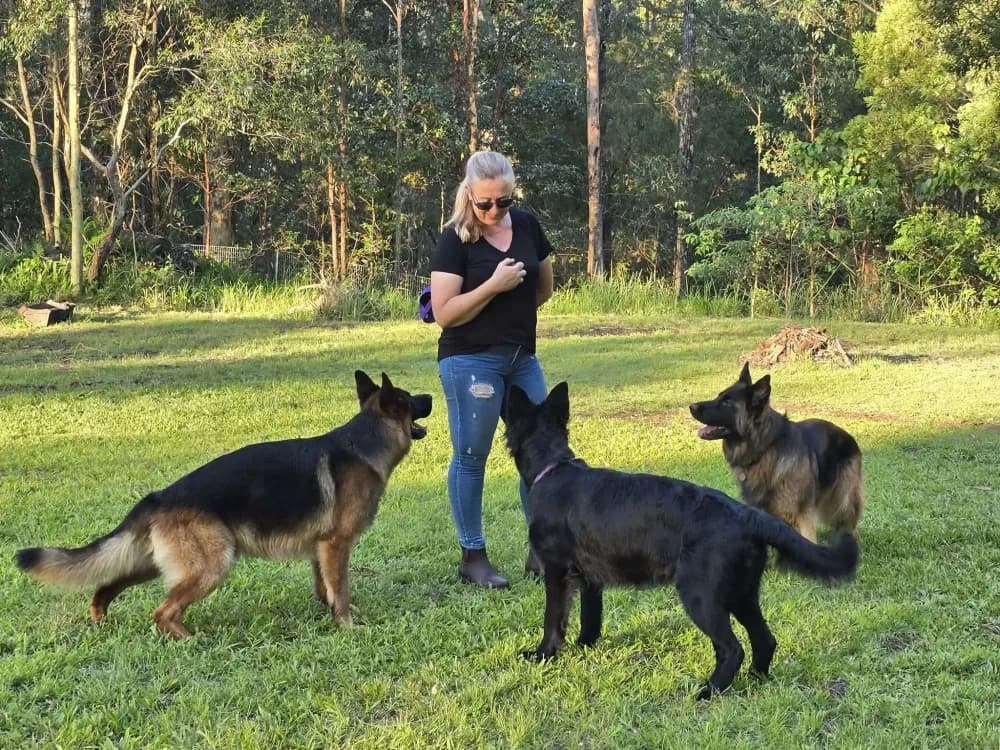
Four generations of understanding dogs means reading behaviour before it happens.
One case sticks with me. A German Shepherd called Max. His owner, Sarah, hadn't walked him in daylight for eight months. They'd become completely housebound. She was ready to give up.
Six weeks later, we were walking through a busy park together. Max saw another dog, glanced at it, and kept walking. No tension. No drama. Just... a walk.
Sarah cried. I nearly did too.
The Peaceful Stroll
That's what I call a Peaceful Stroll. And it's what I want for every family I work with.
Since that first breakthrough, I've codified my approach into a clear, repeatable system that addresses both dog and owner together.
First, we figure out what's actually going on. What triggers your dog? At what distance? What does their body language look like before they react? Every reactive dog is different, and we need to understand yours specifically before we do anything else.
Most trainers jump straight to training. We don't. If your dog is already running on cortisol, nothing we teach them will stick. So we lower the pressure first. Sometimes that means fewer walks for a week or two. It feels counterintuitive, but it works.
Now we teach. New responses to old triggers. But not through force, and not by shutting your dog down. We're building genuine confidence here, not just obedience. You'll learn to read your dog in ways you never have before, and they'll start looking to you for guidance instead of reacting on their own.
Training in your living room is one thing. The real world is another. We practice in parks, on footpaths, near schools and cafes. Gradually increasing the challenge, but always setting your dog up to succeed. This is where the work becomes permanent.
This is what we've been working toward. A walk that's actually enjoyable. Where you're not scanning for threats. Where your dog isn't coiled like a spring. Just you, your dog, and the world finally getting along.
Behind every reactive dog is an owner who feels like a failure.
They avoid the neighbours. They walk at 5am to escape the judgement. Some are seriously considering rehoming because they've run out of ideas.
I've been there with them, in those early morning walks. I've seen the shame. The exhaustion. The grief of loving a dog who makes your life harder every single day.
And I've seen what happens when it clicks. When the dog they were told was “too far gone” walks past another dog without so much as a glance. When the owner realises, maybe for the first time in years, that this could actually get better.
That moment? That's everything.
That's why I do this.
Positive Pup Academy exists because I've seen too many good dogs and good owners suffer unnecessarily. Because I know there's a better way. And because that look on someone's face when they realise their dog isn't broken, when they realise they're not broken, is worth more than I can say.
Four generations of German Shepherd breeding. That's not something you pick up from a weekend course. It means understanding how genetics and environment interact to shape a dog's personality. That knowledge shapes how we read body language and design training plans.
Take the First Step
If you're tired of tense walks and ready for a different approach, we'd love to hear your story.
Every journey starts with a conversation. Tell us about your dog, your challenges, and your goals. Together, we'll find the right path forward.